7 Mistakes You’re Making with Your Brakes (and How to Avoid a Costly Repair)
Imagine you’re cruising down Edgewood Road, heading toward a weekend game or just grabbing groceries. Suddenly, your car starts talking to you. It isn’t using words, but you hear it loud and clear: a high-pitched, metallic “eeeee” every time you touch the pedal. Then, a little later, it starts to “shiver” through the steering wheel. Your car is trying to tell you that it’s tired, it’s hurting, and if you don’t listen soon, it’s going to stop talking and start screaming: at your wallet.
Here in Cedar Rapids, our vehicles lead a tough life. From the bone-chilling Iowa winters where road salt eats at every metal surface to the pothole-ridden spring thaw, your braking system is under constant siege. At Denny’s Automotive & Muffler Center, we see the same mistakes week after week. Most of them are born out of a desire to save a few bucks or a simple “I’ll get to it next month” mentality.
Unfortunately, “next month” usually turns into a much more expensive brake repair bill. Let’s look at the seven most common mistakes you might be making with your brakes and how you can avoid the financial headache.
1. Ignoring the “Warning Shot” Squeal
The Problem: Most brake pads are designed with a small metal tab called a wear indicator. When the friction material gets low, this tab scrapes against the rotor to create a high-pitched squeal.
The Symptom: You hear a thin, metallic chirping or squealing noise that often disappears when you actually apply the brakes, or only happens during light stopping.
The Solution: This is your car’s early warning system. At this stage, you likely only need a basic brake service: replacing the pads. If you ignore this for another 500 miles, that metal tab will start carving grooves into your expensive rotors, turning a simple pad swap into a full-system overhaul.
2. “Riding” the Brakes on Hillcrest or Downed Grades
The Problem: Friction creates heat. A lot of it. When you keep your foot constantly on the brake pedal while descending a long hill, the pads and rotors never get a chance to cool down.
The Symptom: You might notice a faint “burning” smell (similar to an electrical fire) or experience “brake fade,” where the pedal feels firm but the car simply isn’t slowing down as quickly as it should.
The Solution: Practice “engine braking” by downshifting or use the “pulse” method: apply the brakes firmly to scrub off speed, then let off completely to allow air to circulate and cool the components. Excessive heat can warp your rotors, leading to vibrations that require professional brake repair.

3. Treating Brake Fluid Like It Lasts Forever
The Problem: Brake fluid is hygroscopic, which is a fancy way of saying it acts like a sponge for moisture. Over time, water seeps into the sealed system through microscopic pores in the hoses.
The Symptom: A “spongy” or “mushy” brake pedal. If you have to pump the pedal to get the car to stop, or if the pedal sinks toward the floor at a red light, your fluid is likely contaminated or boiling.
The Solution: You should have your brake fluid tested and flushed every two years or 30,000 miles. Water in the lines doesn’t just lower the boiling point; it also causes internal corrosion in your calipers and ABS master cylinder. Replacing an ABS module is significantly more expensive than a simple fluid flush.
4. The “Pad Slap” (DIY Mistake)
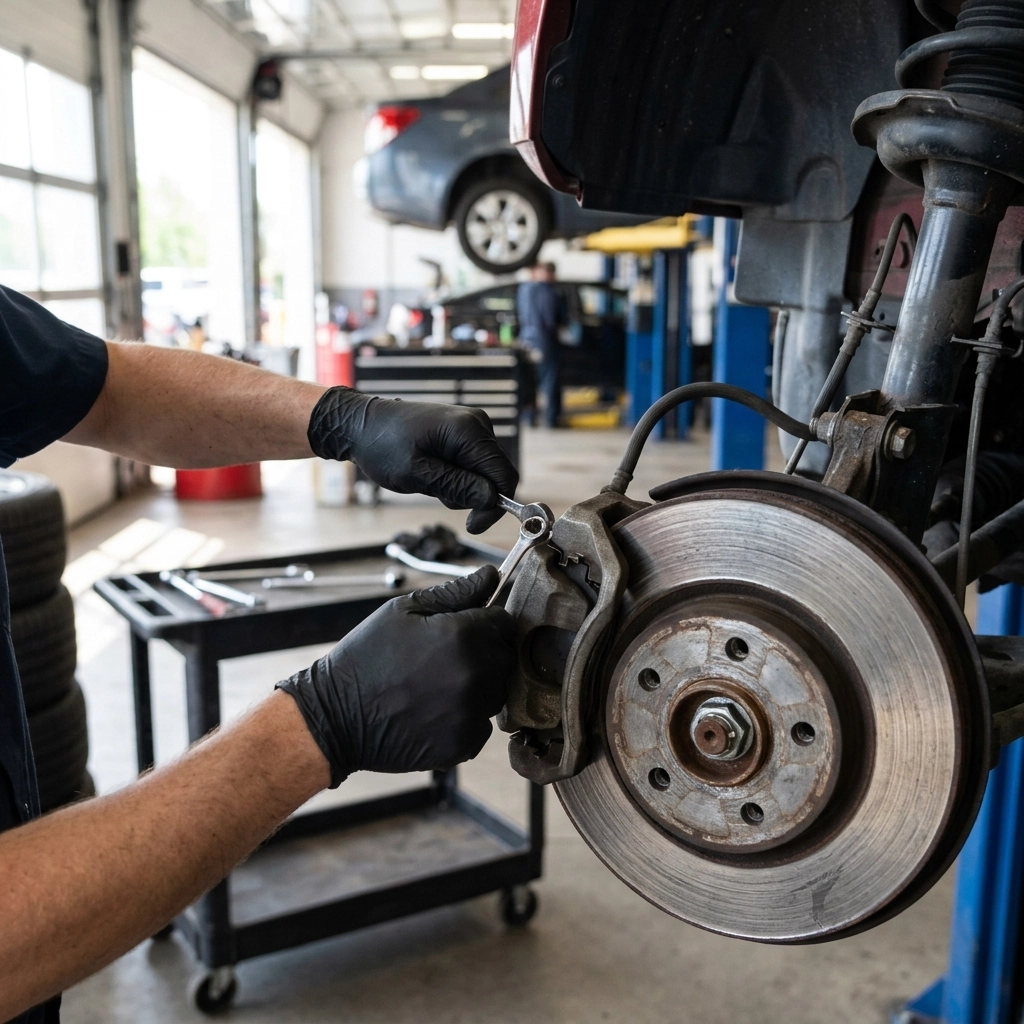
The Problem: We get it: you’re handy with a wrench. But many DIYers try to save money by just throwing new pads onto old, worn rotors without resurfacing or replacing them.
The Symptom: Squealing from day one, uneven braking, or a pulsating pedal.
The Solution: New pads need a perfectly flat surface to “bed in” correctly. If your old rotors have grooves or “heat spots,” the new pads won’t make full contact. You’ll end up with decreased stopping power and pads that wear out in half the time. If you’re looking for auto repair near me to handle this correctly, ensure the rotors are either machined or replaced alongside the pads.
5. Neglecting the Hardware and Lubrication
The Problem: Your brakes aren’t just pads and rotors; they involve sliding pins and clips that allow the caliper to move freely. In the Cedar Rapids climate, salt and grime seize these parts up.
The Symptom: Uneven pad wear (one pad is thin while the other looks new) or a car that “pulls” to one side when you aren’t even braking.
The Solution: During any brake service, the technician should clean the bracket and lubricate the guide pins with high-temperature silicone grease. If these pins seize, your brakes stay “on” even when your foot is off the pedal, dragging your fuel economy down and wearing your parts out prematurely.

6. Waiting for the “Grind”
The Problem: This is the point of no return. You’ve ignored the squeak, you’ve ignored the smell, and now you’re hearing a deep, rhythmic growl.
The Symptom: A sensation like sandpaper rubbing together, often felt through the floorboards. This is metal-on-metal contact.
The Solution: At this point, your pads are gone, and the metal backing plate is chewing into the rotor. You can no longer just “turn” or resurface the rotors; they are likely destroyed. In some cases, the heat generated from metal-on-metal contact can even damage the caliper piston or wheel bearings. If you hear grinding, stop driving and call a tow truck or head straight to a shop.
If you’ve noticed other odd noises, like from your exhaust, it’s worth checking out our guide on muffler trouble signs to see if you have multiple issues brewing.
7. Hanging the Caliper by the Hose
The Problem: This is a classic mistake during a DIY brake job. When the caliper is removed to get to the pads, it’s often left dangling by the rubber brake hose.
The Symptom: You might not notice it immediately, but the weight of the heavy metal caliper can tear the internal lining of the hose. This can lead to a “restricted” hose that acts like a one-way valve, causing the brakes to lock up or leak weeks later.
The Solution: Always use a “S” hook or a simple zip-tie to hang the caliper from the coil spring or frame. Never let the hose take the weight.
Immediate Actions You Can Take
If you suspect your brakes are failing, don’t wait. Here is a quick checklist for Cedar Rapids drivers:
- Listen: Turn off the radio once a week and drive with the windows down near a wall. The echo will help you hear any early squeaks.
- Feel: If your steering wheel shakes when braking at highway speeds, your rotors are likely warped.
- Look: Most modern wheels allow you to see the brake pads through the spokes. If the pad looks thinner than a sacrificial Oreo cookie, it’s time for a change.
Why Professional Maintenance Saves You Money
While the “Check Engine” light gets all the glory, your brake system is the most critical safety feature on your vehicle. A proactive brake service at Denny’s Automotive & Muffler Center can catch a $200 problem before it becomes a $1,200 catastrophe. We don’t just “slap pads”; we inspect the lines, check the fluid integrity, and ensure your rotors are within safety specifications.
Whether you’re dealing with a potential exhaust leak or a shaky brake pedal, our goal is to keep you safe on the road. Don’t let a small noise turn into a big bill.
What to do next: If your car has started “talking” to you with any of the symptoms mentioned above, give us a call or stop by. We’ll give your braking system the expert eye it deserves so you can drive with peace of mind.
Related Posts

Can Summer Heat Really Destroy Your Tires? Here’s What Every Cedar Rapids Driver Needs to Know
When July and August temperatures soar across Eastern Iowa, we all feel the intensity. Between…

Looking For a Mechanic Near Me? 10 Things to Know Before Your Summer Road Trip
There is nothing quite like an Iowa summer. Whether you are heading up to the…

Getting Hitch-Ready: What to Know About Professional Trailer Hitch Installation in Eastern Iowa
There is something uniquely American about the freedom of the open road, especially here in…